How to Choose the Right Water Pump Set for Your Needs?

Time:2026-06-01 Author:Ethan
0%

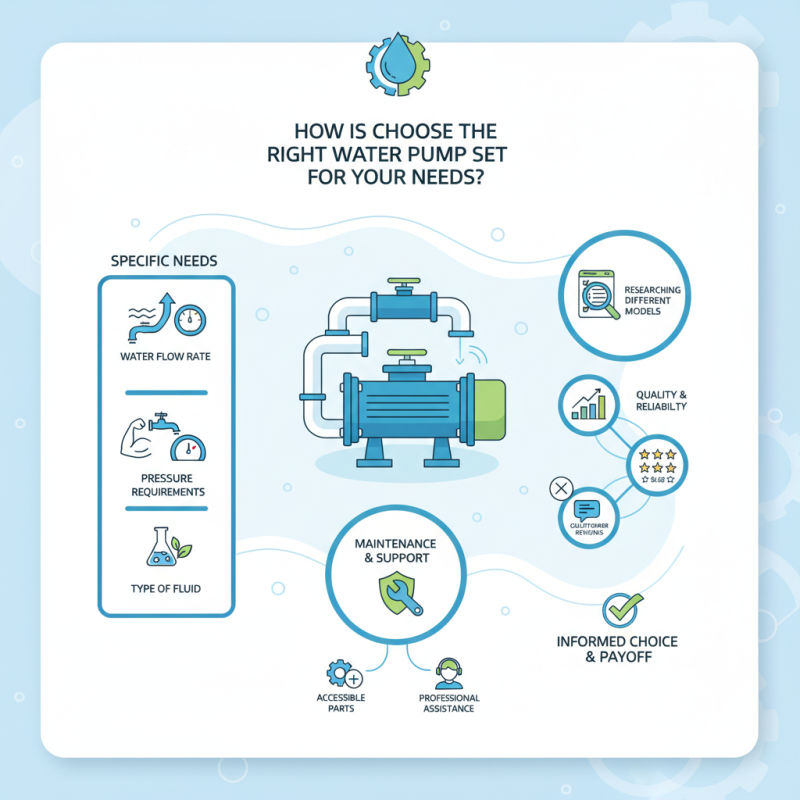
Choosing the right Water Pump Set can significantly impact your water management efficiency. With various options available, the decision may feel daunting. Every project has unique requirements, making it essential to understand your specific needs. You must consider factors such as water flow rate, pressure requirements, and the type of fluid being pumped.

Researching different models is crucial. Look for brands known for quality and reliability. Customer reviews can provide insight into performance and durability. However, not all feedback is helpful. Some reviews may not reflect your situation. It’s vital to seek information from multiple sources.

Additionally, think about maintenance and support. A good Water Pump Set should have accessible parts and professional assistance if needed. This aspect is often overlooked, leading to frustration later. Assessing these elements will help in making an informed choice. Finding the perfect match for your needs requires effort, but the payoff is worth it.
How to Choose the Right Water Pump Set for Your Needs?

Understanding the Different Types of Water Pumps Available in the Market

Choosing the right water pump is crucial for various applications. Understanding the different types available helps in making an informed decision. For instance, centrifugal pumps are commonly used for irrigation and industrial applications. They work best in scenarios where liquid needs to be moved over long distances. Submersible pumps are ideal for deep wells, efficiently drawing water from underwater. Reports suggest that these pumps account for nearly 40% of the market share due to their versatility.

It's important to consider the specific needs of your project. Flow rate, head height, and the fluid being pumped are vital factors. Data from industry reports show that selecting pumps with the right specifications can increase efficiency by up to 30%. However, improper selection may lead to operational inefficiencies and increased costs. Assessing your requirements properly can prevent these pitfalls.

Tips: Always calculate the total dynamic head required for your setup. This calculation ensures that the pump can handle the pressure needed for your application. Don’t forget to factor in potential changes in water quality. Sediment or debris can affect pump performance. Thus, regular maintenance is necessary to keep the equipment in optimal condition.

Assessing Your Water Volume and Flow Rate Requirements

When choosing a water pump set, assessing your water volume and flow rate requirements is crucial. Understanding these metrics ensures that you select an appropriate pump for effective operation. According to the American Society of Mechanical Engineers (ASME), the flow rate is often measured in gallons per minute (GPM). Most residential applications require between 5 and 30 GPM.

In terms of water volume, consider how much water you need to move in a given timeframe. This could be for irrigation, draining purposes, or supplying water to facilities. Reports indicate that an average household consumes about 300 gallons of water daily. Understanding your specific requirements will help you avoid selecting a pump that is either underpowered or overpowered, both of which are inefficient.

Tips: Always measure your water needs quantitatively. For example, if you require irrigation for one acre of land, calculate the total gallons needed based on crop type and watering frequency.

Also, review pump specifications critically. A common mistake is to overlook the Total Dynamic Head (TDH) when evaluating pump options. The TDH can significantly impact the pump’s performance but is sometimes neglected. Ensure you have a grasp on both static lift and friction losses for an accurate assessment.

Evaluating Pump Features: Power Source, Size, and Design

Choosing the right water pump set can be challenging. Evaluating pump features is crucial to meet your specific needs. Power source is an essential factor. Electric pumps usually offer high efficiency. However, if you face power outages, consider gasoline-powered options. They provide mobility, especially in remote areas.

The size of the pump also plays a critical role. It must match your intended use. A large pump might seem powerful but can be cumbersome. Small pumps tend to be easier to transport. Balance power and portability based on your situation.

Tip: Always check the flow rate and max head to ensure it meets your requirements. Also, think about the design of the pump. Some have compact builds for tight spaces. Others might be bulky but carry more power. Choose wisely.

Taking into account various features can lead to better decisions. Reflect on your needs thoroughly. Don't rush this process. What works well for one task might not suit another. The right pump can make a difference in efficiency.

Considering Maintenance Needs and Durability for Long-Term Use

When selecting a water pump set, considering maintenance needs and durability is crucial for long-term use. A durable pump should withstand various environmental conditions. Check the materials used in construction. Corrosion-resistant options can significantly enhance longevity. Regular maintenance will also play a role. Neglecting this may lead to reduced efficiency or even failures.

Tips: Regularly inspect seals and hoses for wear. Keeping the system clean can prevent debris buildup. Establish a routine check schedule.

Another important aspect is ease of maintenance. Some pumps are designed for quick access to service parts. This can save time in the long run. If you struggle with complicated setups, you might face delays during repairs. Understand the maintenance procedures your chosen pump requires. If they seem cumbersome, explore alternatives.

Tips: Train staff on proper maintenance procedures. Document any repairs for future reference. Consider creating a maintenance log.

How to Choose the Right Water Pump Set for Your Needs?

Type of Water Pump Maintenance Frequency (Months) Expected Lifespan (Years) Durability Rating (1-10) Typical Applications
Submersible 6 15 9 Draining, Irrigation
Centrifugal 12 10 8 Water Circulation, HVAC
Diaphragm 8 12 7 Chemical Transfer, Irrigation
Positive Displacement 10 20 9 High Viscosity Liquids, Fuel Transfer

Budgeting for Your Water Pump Purchase: Cost vs. Value

When budgeting for a water pump purchase, consider the balance between cost and value. The initial price often lures buyers, but lower-cost options might lack durability. Investing slightly more can yield a product that lasts longer and performs better. This approach saves you money in the long run.

Tips: Always check product reviews. Look for real user experiences to avoid common pitfalls. A well-reviewed pump often indicates reliability. It's worth the time to research thoroughly.

Don't forget to factor in maintenance costs, which can add up. A cheaper pump may require frequent repairs or replacements. Assess the energy efficiency of your choice, too. A pump that consumes less energy can lead to significant savings over time, improving overall value.

FAQS

: What are the common types of water pumps?

: Centrifugal pumps are often used for irrigation and industrial needs. Submersible pumps are great for deep wells and underwater applications.

Why is it important to understand pump specifications?

The right flow rate and head height ensure efficiency. Poor selection can lead to higher costs and operational issues.

How can I calculate the dynamic head required?

Calculate the total dynamic head to ensure your pump handles necessary pressure effectively. Don't forget water quality changes.

What should I consider for long-term pump use?

Look for materials that resist corrosion. Regular maintenance is necessary to prevent efficiency loss and potential failures.

How can I make maintenance easier?

Choose pumps with easy access to service parts. Complicated setups may cause delays during repairs and maintenance.

How can I budget effectively for a water pump?

Balance initial costs with durability. Sometimes investing more upfront can save money in the long term through lower repair costs.

What role do maintenance costs play in budgeting?

Cheaper pumps may need more repairs, raising overall expenses. Consider energy efficiency to improve long-term value.

Why should I check product reviews before purchasing?

Reviews provide insights from real users. They help you avoid choosing unreliable products, enhancing your decision-making process.

How should I train staff on pump maintenance?

Provide adequate training on maintenance procedures. A maintenance log can help track repairs and ensure consistency.

What could happen if maintenance is neglected?

Ignoring maintenance might lead to pump failures. This can disrupt operations and result in unexpected costs.

Conclusion

When choosing the right Water Pump Set for your needs, it's essential to understand the various types of water pumps available and their specific functions. Start by assessing your water volume and flow rate requirements to ensure the pump can adequately meet your demands. Additionally, consider the pump's features, such as power source, size, and design, which can affect performance and compatibility with your setup.

Maintenance needs and the durability of the Water Pump Set are also critical factors, as these aspects determine the long-term viability of your purchase. Finally, budgeting is vital—evaluate the cost versus the value provided by the pump, ensuring that it fits within your financial plans while still meeting all necessary requirements for efficiency and reliability. By carefully considering these factors, you can select a water pump set that suits your specific applications effectively.


Ethan

Ethan

Ethan is a seasoned marketing professional with a deep expertise in our company's innovative product line. With a passion for sharing knowledge and insights, he takes the lead in regularly updating our corporate blog, where he explores industry trends, product features, and effective marketing......